
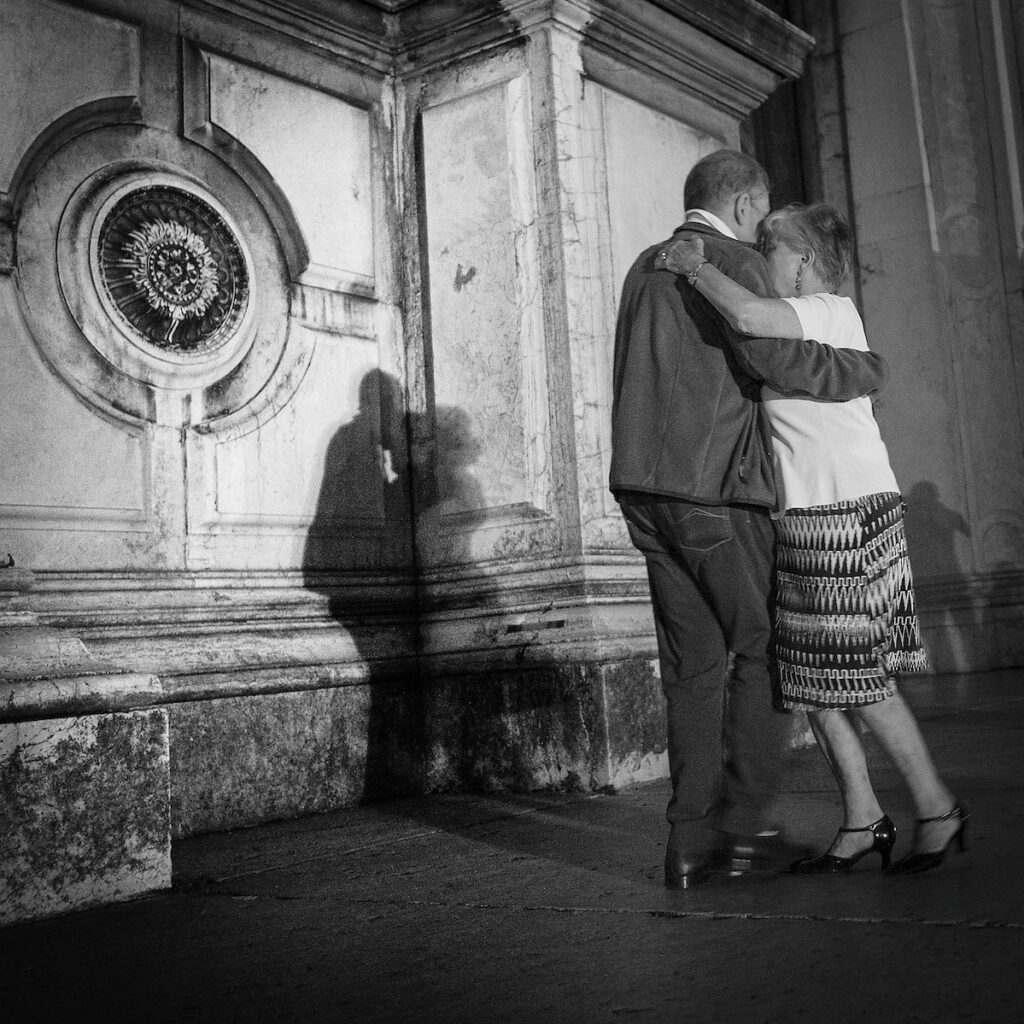
For well over a century, photographers have been recording life on the streets – in the raw and as it happens. Often witty, sometimes provocative, and occasionally disturbing, street photography can stir the emotions like no other photographic genre.
From the early, grainy, black & white efforts of the likes of Henri Cartier-Bresson and Robert Doisneau, to the bold, colourful, 21st-century work of Bruce Gilden, street photography tells the story of life as it unfolds – compelling, unpredictable, unstaged, and often unforgiving.
It is one of the few fields of photography that does not require huge amounts of expensive kit, exotic locations, or complex technical skills. In that sense – and with such low barriers to entry – street photography is more of an art than a science, which can be enjoyed by anyone, irrespective of the depth of their photographic knowledge or the quality of their equipment. But it is perhaps not as easy as it sounds: we need to distinguish between street photography and pictures taken on a street.
So, what’s the difference and why does it matter? It’s really all about intention and approach: street photography is a distinct genre with a focus on capturing candid, unposed moments that reflect life in the public realm. It emphasises storytelling, composition, and spontaneity, aiming to capture the human condition, urban life, or humorous juxtapositions. A good street image isn’t about where it’s taken but how it frames a moment.
Inspiration
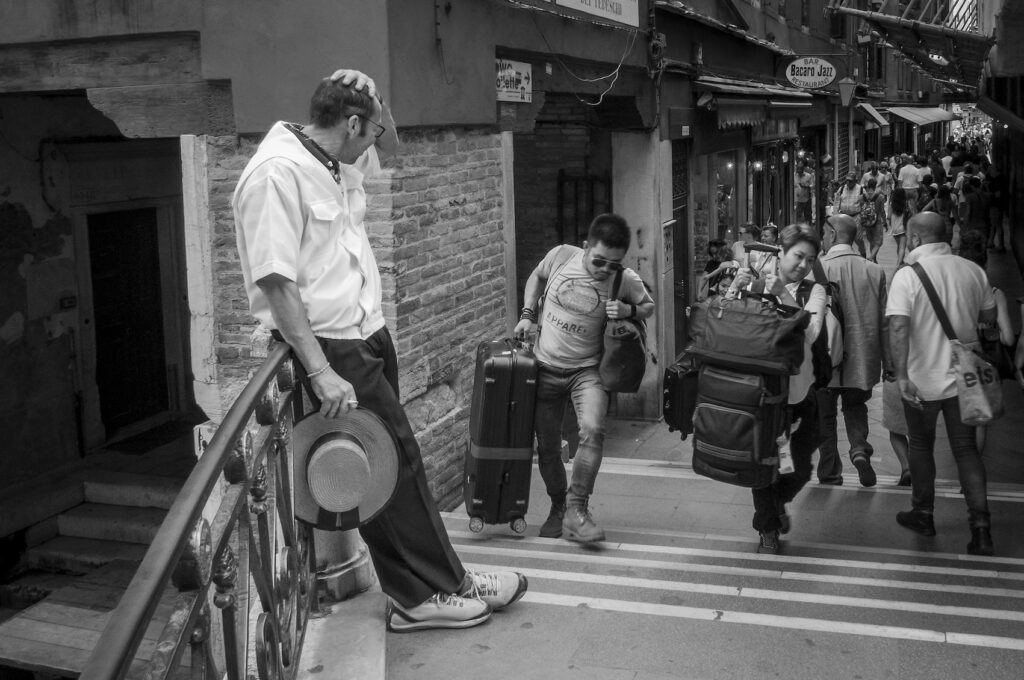
We all find inspiration for street photography in different ways; it could come from our own existing interests or passions, from other photographers, or perhaps as a result of needing to challenge ourselves and push some boundaries. A film, an exhibition or a lecture, a book, a painting, or even a dream could inspire you. There is also no shame in taking inspiration from other photographers; in fact, that’s how many of the masters of street photography started out.
What inspires you? Think about what you like or dislike, what stirs your emotions, what makes you feel happy or angry, what makes you want to press the shutter. What sort of photographs do you enjoy looking at? What sort excite you? Write down the elements you believe come together to make a good street photograph and use these as the starting point.
Silhouettes
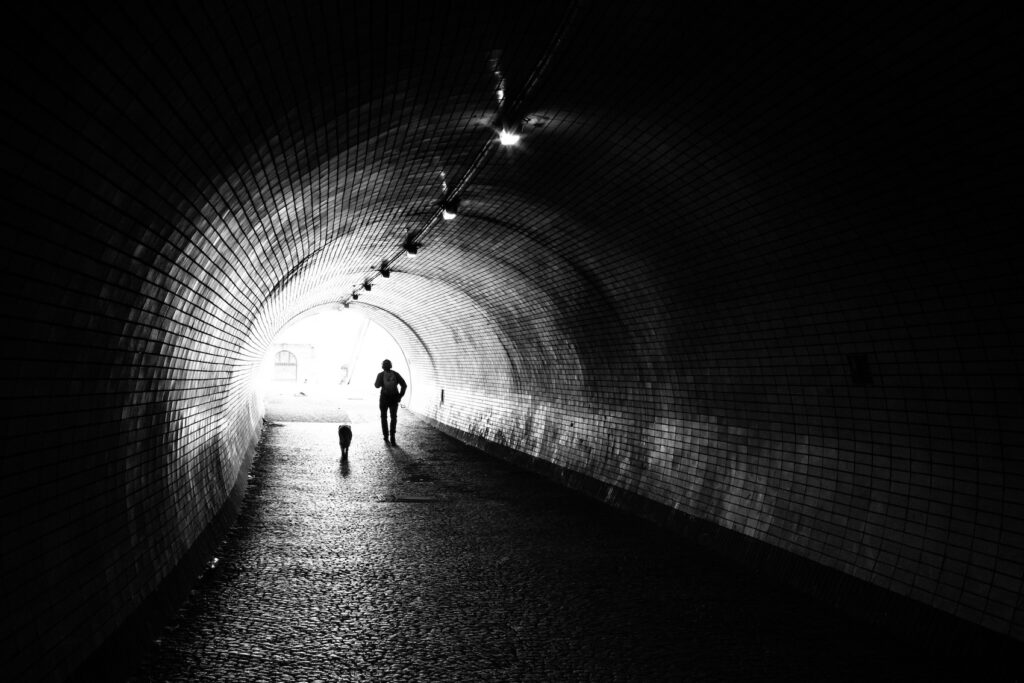
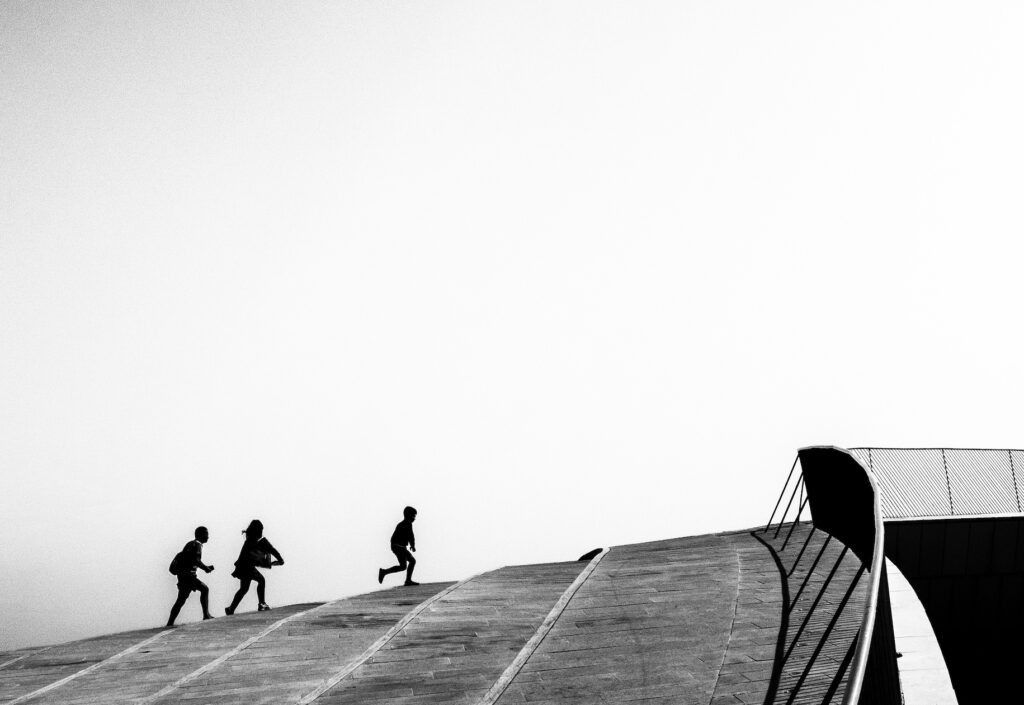
The silhouette has played an important role in street photography since the early days and today is a visual device much used by street photographers with an aesthetic bent. Silhouettes must have clear, simple shapes with black figures and light backgrounds. A good starting point is to find a strong light source facing you and wait for a figure to walk into the scene. It’s important to get the black point on the figure just right (completely
Intentional blur
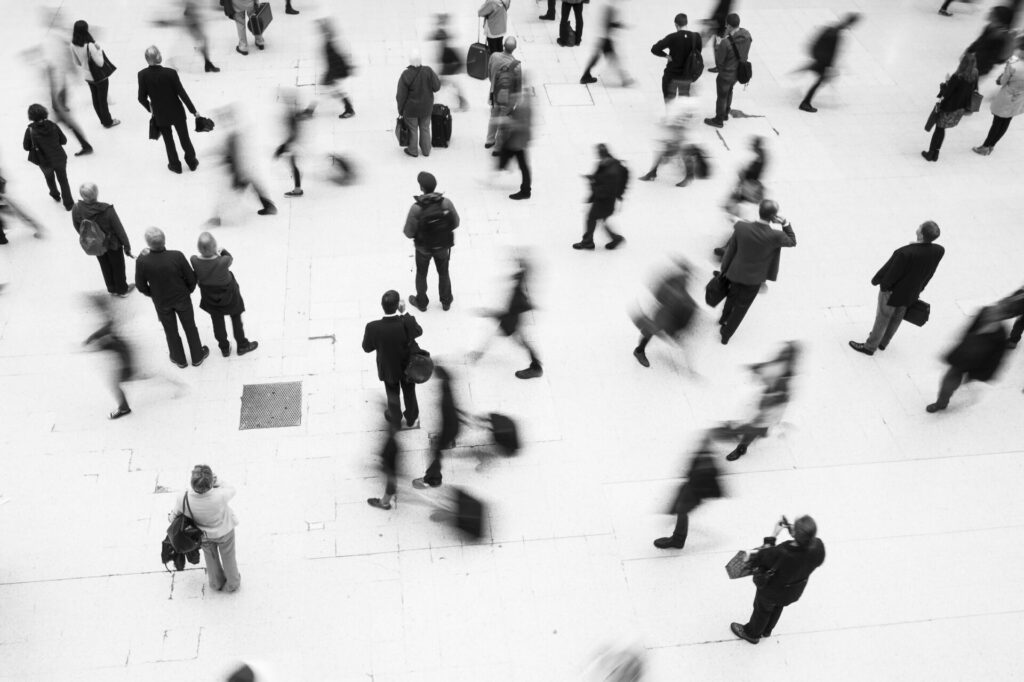
Blur is a great technique used by street photographers to emphasise or isolate something that is stationary while movement is going on around it. By selecting a slow shutter speed – say 1/4–1/8 sec – the stationary object will appear sharp, while anything moving in the frame will be blurred. This technique works best if the subject is moving across the frame, rather than away from you or towards you.
The choice of shutter speed will depend on the speed and direction of the moving objects and you will need to experiment. You will probably need to reduce your ISO and use a smaller aperture to accommodate all the extra light being allowed into the camera.
Shadows
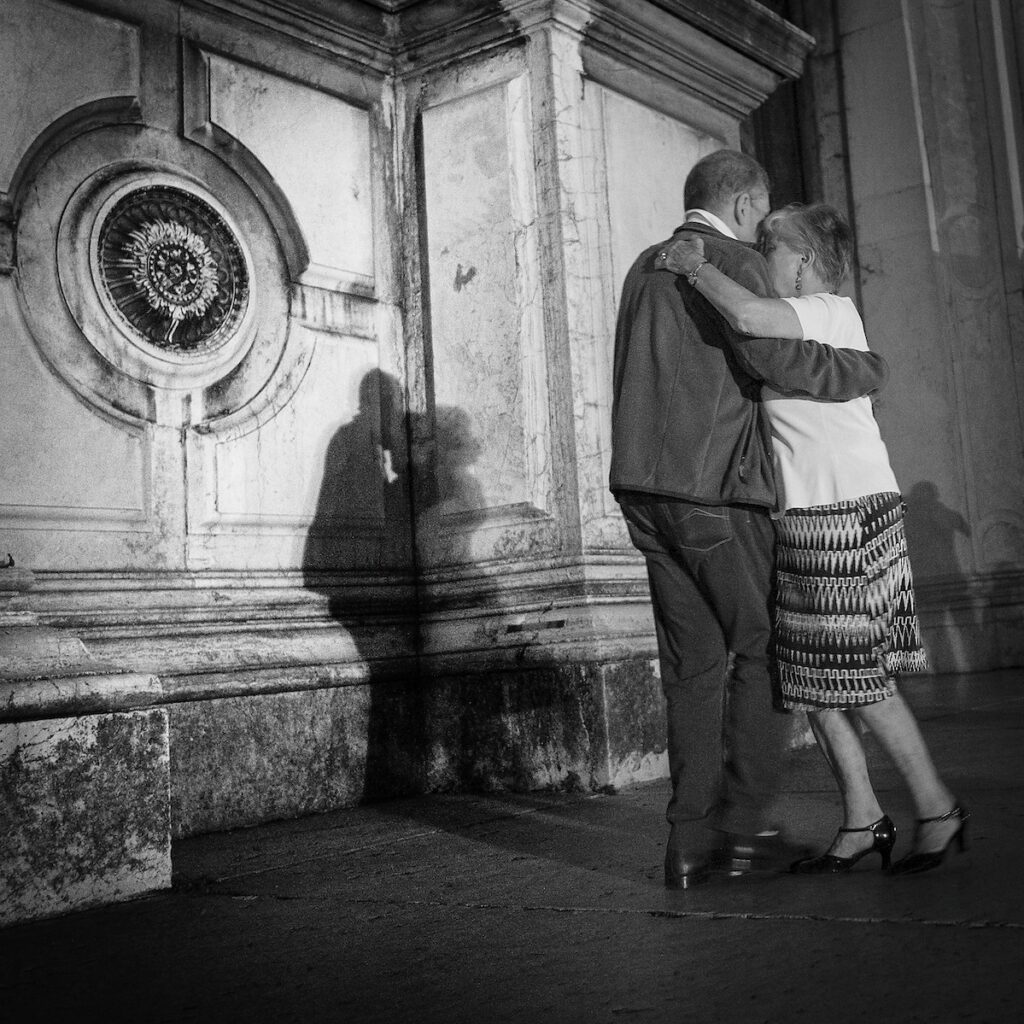
While portrait photographers tend to avoid shadows, street photographers are drawn to them! In some images the shadow is incidental, whereas in others it is the primary focus of the composition. With the sun behind, in front, or to the side of the camera, the resulting shadows can produce a striking effect, particularly if they are dark, strong, and well defined.
Shadows can be used playfully – a shadow on a face could look like a silly moustache or a black eye, or it could make someone’s head or another key part of a scene invisible. When people are in the shot, think about the shadows falling on them and also the shadows created by them. With the latter in mind, try experimenting with shadows at different times of the day; a midday shadow will have very different qualities to one cast early in the morning or late in the afternoon. Watch people as they move and observe how the shadows change, constantly creating new patterns.
Also consider the surface on which the shadow falls. A surface with an interesting texture, such as a cobbled road, can add another dimension to your shot, but a completely smooth surface can be equally pleasing.
Shadows work particularly well in the springtime (mid-morning during late May or early June is just about perfect), when they are deep and provide a lovely tonal range between them and the superbright highlights.
As you become more practiced as a street photographer and your powers of observation develop, you should become more tuned into the presence of shadows and the opportunities they can offer.
How to be invisible
Street photographers generally prefer to be unobserved and not outed. There are two principal reasons for this. Firstly, you need to preserve the integrity of the scene. Once you have been spotted, something in the scene will change; people will modify their behaviour and what you saw originally will not be what the camera records; Joel Meyerowitz calls this ‘bruising the scene’.
Secondly, it’s in our nature to want to avoid confrontation. If you can work without being seen, so much the better, although any challenges are unlikely to have serious consequences.
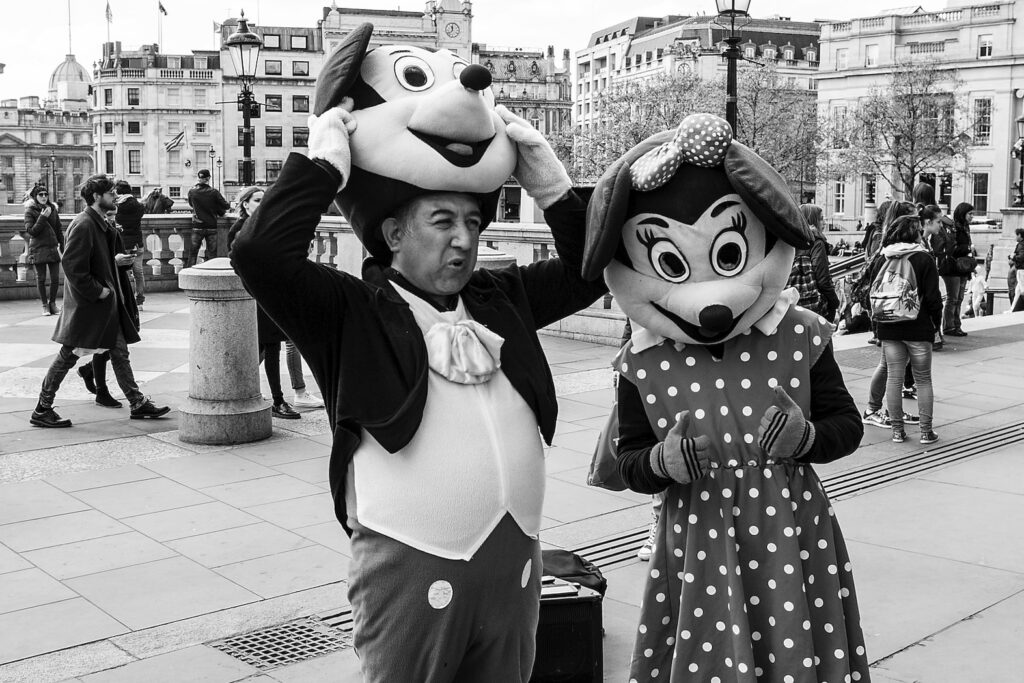
Blend in: Think about your environment and the people around you. Do you look as though you belong there? Do you blend in? People are less likely to notice you if you look like everyone else; it is important not to stand out in any way – and even more important not to look like a photographer. You will blend in more easily if you walk slowly and avoid sudden, jerky movements.
Shoot from the hip: Bringing your camera up to eye level will always draw attention to you. With a bit of practice (and lots of wasted frames along the way), you will get to know your camera and lens combination really well and you will know exactly what shooting angle is required to compose the shot. If your camera has an articulated (hinged) rear viewing screen, shooting from the hip becomes considerably easier. While some street photographers shun this as an easy option, it is a useful technique that can work well with a wideangle lens.
However, beware of becoming overly reliant on this technique and using it as a crutch; you should get into the habit of using the viewfinder in the normal way, only shooting from the hip when you really need to do so.
Mastering Street Photography is published by Ammonite Press, price £19.99. You can purchase it from giftstome.co.uk for only £15.99 (+P&P) using the code R6051. Offer ends 27 March 2026.